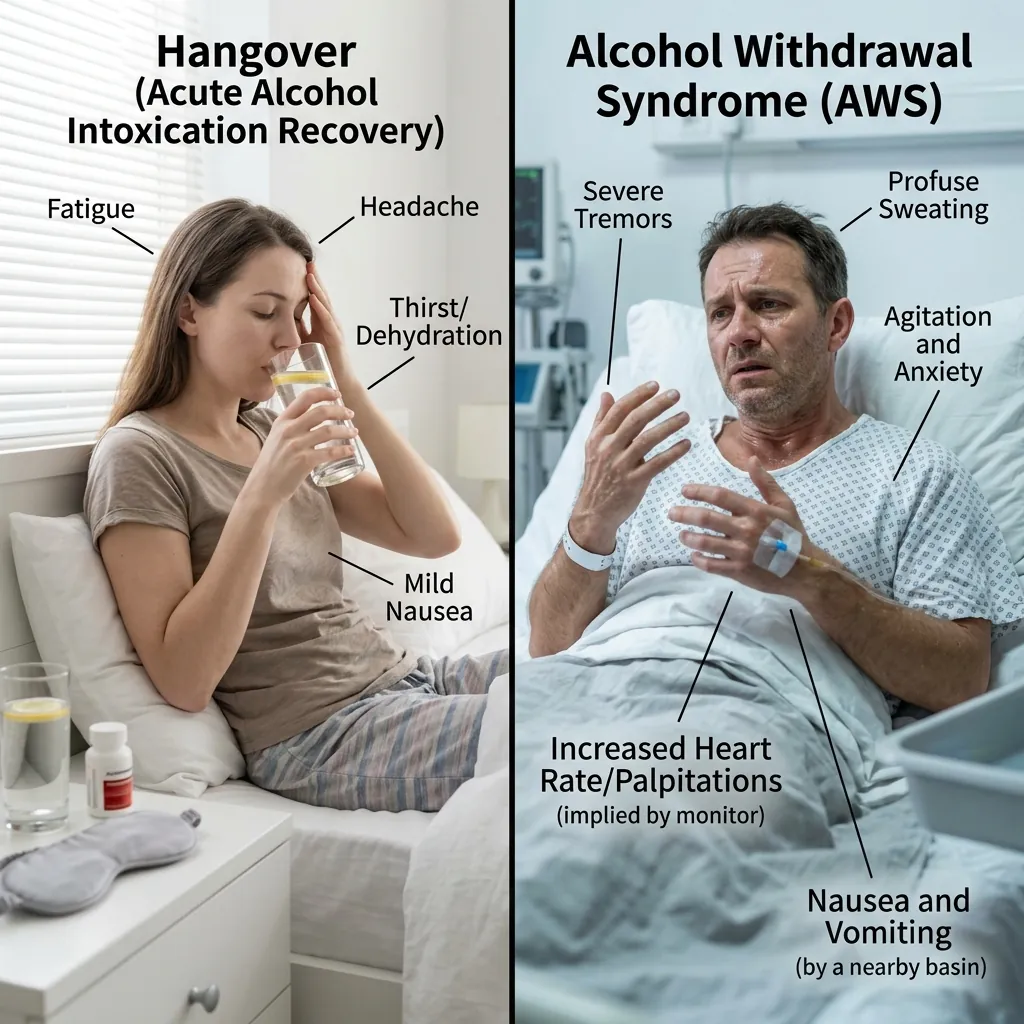
A rough morning after drinking is common. But if you drink regularly and your symptoms feel more intense than the usual headache and fatigue, you may be experiencing alcohol withdrawal rather than a hangover. The distinction matters because withdrawal can become life-threatening, while a hangover, though miserable, is not dangerous on its own.
Alcohol withdrawal and hangover both appear after alcohol leaves your system. Both can cause headaches, nausea, and shakiness. The differences lie in timing, severity, and what is happening in your body. Knowing how to tell the difference between a hangover and alcohol withdrawal could determine whether you need a glass of water or an emergency room visit.
Key Differences at a Glance
- Hangovers appear after a single night of drinking and resolve within 24 hours
- Alcohol withdrawal appears in regular, heavy drinkers and lasts several days
- Hangovers do not cause seizures or hallucinations
- Withdrawal carries serious medical risk without proper treatment
- The timing of symptom onset differs: hangovers peak when blood alcohol reaches zero, withdrawal worsens over time
What a Hangover Actually Is
A hangover is a cluster of symptoms that follow a single episode of heavy drinking. It is caused by several overlapping factors: dehydration, acetaldehyde buildup (a toxic byproduct of alcohol metabolism), disrupted sleep architecture, and inflammation triggered by alcohol.
Hangover symptoms typically peak when your blood alcohol concentration reaches zero, usually 6 to 8 hours after you stop drinking. They resolve on their own within 24 hours, though they are uncomfortable the entire time.
Common Hangover Symptoms
- Headache
- Nausea and vomiting
- Fatigue and weakness
- Dry mouth and increased thirst
- Sensitivity to light and sound
- Mild anxiety or irritability
- Difficulty concentrating
Hangovers do not cause tremors, high fever, confusion, or hallucinations. If you are experiencing those symptoms, something more serious is happening.
What Alcohol Withdrawal Actually Is
Alcohol withdrawal is a physiological response to the sudden absence of alcohol in a person who has become physically dependent. The brain of a heavy, regular drinker adapts over time to the continuous presence of alcohol, which is a central nervous system depressant. When alcohol is removed abruptly, the brain overcorrects, producing a state of hyperexcitability.
This is why withdrawal symptoms are often the opposite of the sedating effects of alcohol. Instead of relaxation, you get agitation. Instead of reduced heart rate, you get rapid pulse. Instead of numbness, you get heightened sensitivity to stimuli.
Alcohol withdrawal does not happen to casual drinkers after a night out. It happens to people who drink heavily on a near-daily basis for weeks, months, or years. If your body has become dependent on alcohol, stopping suddenly triggers a neurological cascade that goes far beyond a standard hangover.
Alcohol Withdrawal Symptoms
- Tremors (shaking hands, limbs)
- Profuse sweating
- Rapid heart rate and elevated blood pressure
- Severe anxiety or panic
- Nausea and vomiting
- Insomnia
- Seizures (in severe cases)
- Hallucinations (visual, auditory, or tactile)
- Confusion and disorientation (delirium tremens)
- Fever
The Timing Difference Is Critical
One of the clearest ways to distinguish between the two is timing. A hangover begins as alcohol clears your system and steadily improves throughout the day. You wake up feeling rough, but by evening you feel better.
Alcohol withdrawal follows a different arc. Symptoms begin 6 to 24 hours after the last drink and often worsen over the next 48 to 72 hours. If you wake up shaking and sweating and those symptoms intensify rather than ease up, that is a signal your brain is in withdrawal.
“The key clinical distinction is the trajectory. A hangover gets better. Withdrawal gets worse before it gets better, and for some people, it can become a medical emergency.” — SAMHSA Treatment Improvement Protocol 45
The “Hair of the Dog” Problem
People who are in alcohol withdrawal sometimes drink more alcohol to make the symptoms stop. This works temporarily because it relieves the nervous system hyperexcitability. But it is also a clear sign of physical dependence, not just a hangover.
If you have to drink in the morning to stop shaking, that is not treating a hangover. It is managing withdrawal by delaying it. This cycle continues until the person either gets professional help or something goes seriously wrong.
A true hangover does not require more alcohol to resolve. It resolves on its own with hydration, rest, and time.
Who Is at Risk for Withdrawal Rather Than a Hangover?
Not everyone who drinks develops physical dependence. The people most at risk for alcohol withdrawal rather than a hangover include:
- People who drink every day or almost every day
- People who drink large quantities regularly (more than 8 drinks per week for women, more than 15 for men, per NIAAA guidelines)
- People who have gone through alcohol withdrawal before
- People who experience anxiety or shaking when they have not had a drink for several hours
- People who drink in the morning or hide their drinking
If you recognize yourself in this list, it is worth speaking with a doctor before you try to stop drinking on your own.
When Symptoms Mean Go to the ER
Seek emergency medical care immediately if you or someone with you is experiencing:
- A seizure
- Hallucinations (seeing, hearing, or feeling things that are not there)
- Severe confusion or disorientation
- High fever combined with agitation and rapid heart rate
- Loss of consciousness
These are symptoms of delirium tremens, the most severe form of alcohol withdrawal. Without medical treatment, DTs can be fatal. With treatment, most people recover fully.
Medical Detox vs. Sleeping It Off
If you have a hangover, sleeping it off is reasonable. Drink water, eat something if you can, and give your body time to recover.
If you are in alcohol withdrawal, that approach is dangerous. Medical detox uses medications like benzodiazepines to calm the central nervous system, prevent seizures, and manage the symptoms safely. Most medically supervised detox programs also monitor your vital signs around the clock so providers can intervene quickly if symptoms escalate.
You do not need to be in a crisis to ask for help. If you are not sure whether you are experiencing a hangover or withdrawal, call your doctor, an urgent care clinic, or a treatment helpline. The SAMHSA National Helpline (1-800-662-4357) is available 24 hours a day and can help you find the right level of care.
Knowing Which One You Are Dealing With
The core question is whether your symptoms are getting better or worse. A hangover improves hour by hour. Alcohol withdrawal tends to worsen for the first 48 to 72 hours before it begins to ease.
If your symptoms include tremors, escalating anxiety, sweating that soaks through your clothes, or anything that feels neurological, do not wait. Physical dependence on alcohol is not a character flaw. It is a physiological state that requires medical attention to reverse safely.
Knowing the difference between a hangover and alcohol withdrawal is the first step toward getting the right level of care.
Leave a Reply